
The meaning and origin of Tantra
The word Tantra can be understood as an “instrument for expanding consciousness.” It is derived from the Sanskrit roots Tan, meaning “to expand”, and Tra, meaning “instrument” or “tool”.
This concept encompasses the expansion of the mind and the liberation of energy from its material form. The goal of Tantra is to unite our individual energy with universal energy.
Tantra is an ancient Indian spiritual and philosophical tradition that embraces life in its entirety. Rather than rejecting the body, the senses or human desires, Tantra integrates them into a path of awareness and self-discovery.
The body is viewed as a temple and life energy as something to be consciously experienced, cultivated and transformed. Through meditation, sound, breath, movement, awareness and other practices, Tantra invites us to become more present and deepen our connection with ourselves and life and expand our consciousness.
The concept of duality in Tantra
Tantra recognises the apparent dualities of life – masculine and feminine, stillness and movement, consciousness and energy, light and darkness.
Their union represents the understanding that consciousness and energy are not truly separate, but different expressions of one reality.
Tantra understands duality as a catalyst for the emergence of life: positive and negative, light and dark, male and female, energy and matter, sexuality and spirituality, and so on.
When this duality ceases to be a conflict in which one aspect negates another, and we instead accept and understand our own duality, life becomes a joyful dance of delight.
Tantra teaches us to expand our consciousness and embrace all facets of our duality. Tantra accepts contradictions and recognises that duality is an essential part of life. It views the body as a divine temple, since everything originates from the same source.
The origins of modern tantric massage
Full-body Tantra Massage is a modern form of Neo-Tantra massage. This approach was developed around 1978 by Andro Andreas Rothe in Berlin. He also founded the first German Tantra institute, Diamond Lotus Tantra. However, the development of Tantra Massage did not end there; today, numerous forms and styles exist.
Traditional Tantra is a spiritual movement that offers a faster and more accessible path to liberation – not only for monks or ascetics.
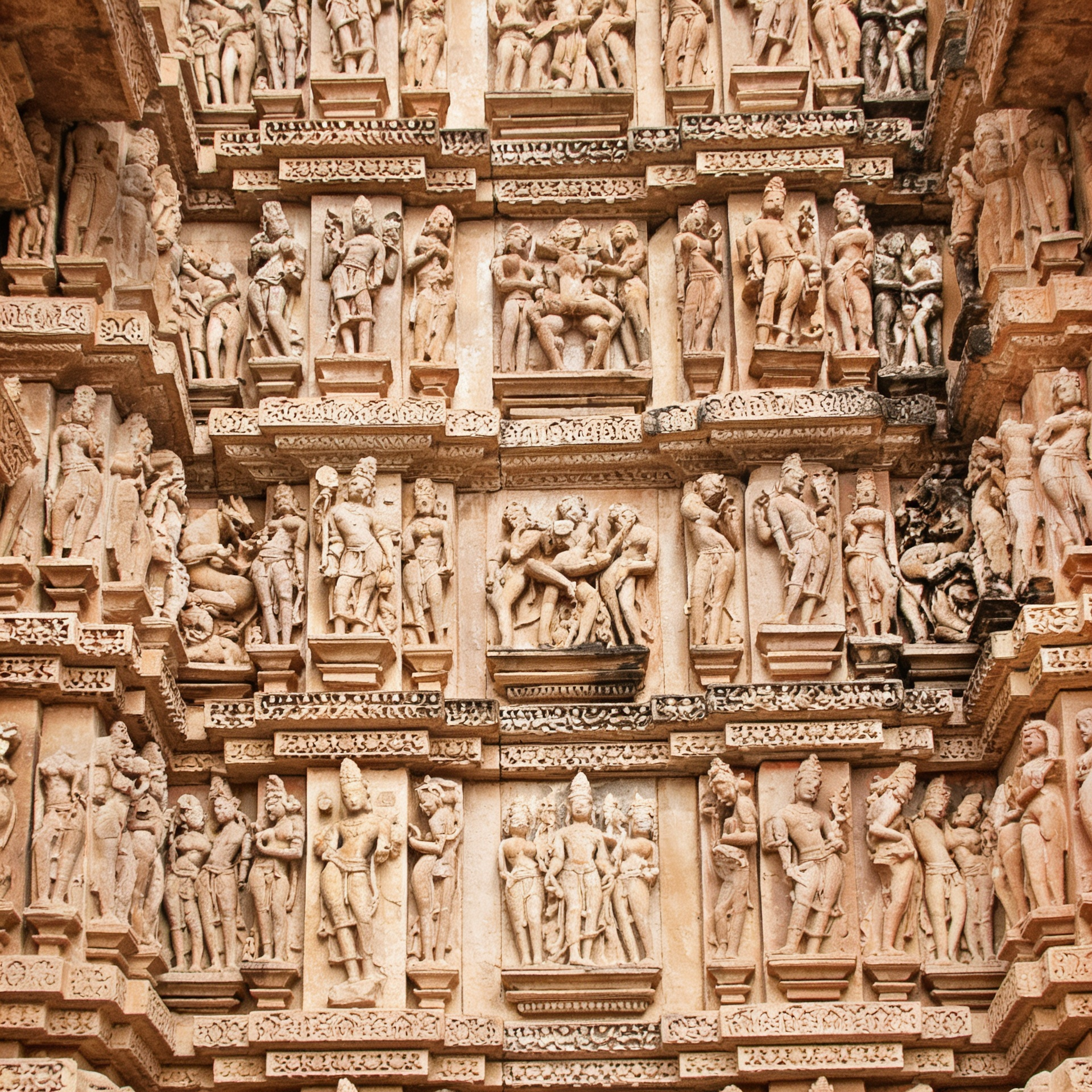
In the 11th and 12th centuries, Tantra was widespread in India. In contrast to classical yoga teachings, Tantric teachings challenged the notion that Moksha (liberation) could only be achieved through strict asceticism and the renunciation of sensual pleasures.
Tantra is a universal method that can be practised by anyone, even in everyday life, regardless of caste. In Indian tradition, Tantra can refer to a “text, theory, system, method, instrument, technique, or practice.” Its methods include the ritual worship of deities, the use of mantras and mandalas, yoga, breathing techniques and bodywork.
Misconceptions about Tantra massage
It is important to note, however, that much of what is currently taught as Tantra in the West does not truly align with its authentic principles.
Tantric massage is often presented, implicitly or explicitly, as an ancient massage technique originating in Indian tantric practices. This is not entirely accurate, however. Extensive research on this topic has found no evidence of Tantric massage in traditional, ancient tantric texts and literature.
Nevertheless, this does not mean that no form of Tantric massage existed. Massage, particularly Ayurvedic massage, is mentioned in Sanskrit texts dating from 1500 to 500 BCE. Therefore, it is plausible that Tantra practitioners also incorporated massage treatments into their practice, which are consistent with the principles of Tantra, emphasizing wholeness and completeness. In summary, Tantra encompasses the expansion of consciousness, the acceptance of duality, and the integration of all aspects of embodiment.
Even though Tantra massage was not explicitly mentioned in ancient texts, it is conceivable that massage treatments were performed by Tantra practitioners in accordance with the principles of Tantra (wholeness and completeness).
The spiritual philosophy of Tantra
Tantra maps the body towards a kind of spiritual physiology, cultivating bliss, awareness and identity with divine consciousness. It views our embodied state as an opportunity for practice, not an obstacle. Your body is a temple.
The role of Shiva and Shakti in Tantra
Shakti and Shiva play a crucial role in Tantra. Energy (matter) and pure consciousness unite. Shiva and Shakti are two sides of the same coin and are often depicted as one, with one side feminine and the other masculine. However, this is frequently misinterpreted as the union of man and woman. Sexuality is natural, but in this context, it is intertwined with spirituality.
Together, Shiva and Shakti form a cosmic union that encompasses the harmonious interplay of masculine and feminine energies. Shakti, the feminine energy, is the maternal principle. It is a universal truth that there is no greater love than that of a mother. Shakti is the source of matter and physical energy, as well as of nearly everything else. Her dance is the dance of the cosmos. She is identified as feminine energy because Shakti is responsible for creation, just as mothers are responsible for birth. Shakti embodies the potential for manifestation, the dynamic energy that transforms the formless into tangible reality. She is the creative force that gracefully unfolds the dance of life.
Shiva, on the other hand, remains steadfast as an observer. He embodies pure consciousness, beyond time and space. Shiva symbolizes the eternal and formless nature of being and is the unchanging reality underlying the ever-shifting world of phenomena.
Often depicted as a meditating ascetic, Shiva represents the timeless consciousness that permeates all aspects of existence. He embodies stillness, purity, and supreme enlightenment.
Shakti, in contrast, is worshipped as the divine mother who radiates boundless energy and vitality. She is the driving force of creation and pulsates in the rhythm that brings life into existence.
Tantra and the holistic approach to life
Tantra is an ancient Indian tradition focused on expanding awareness and connection with the divine through various practices. Origin Tantra encompasses a holistic approach to life, viewing the body as a temple and integrating spirituality within the body.
Tantra is a spiritual and philosophical system with roots in Hinduism and Buddhism. It emphasizes the interconnectedness of body, mind, and spirit. Tantra embraces all aspects of life, including needs and desires as expressions of the divine.
By opening us to altered states of consciousness, Tantra can offer new perspectives, insights and ways of experiencing life.
Get in Touch
Monday - Sunday : 09.00 - 20.00
also on public holidays